

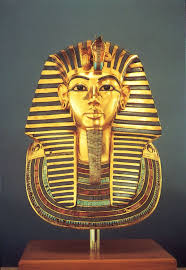
There Is More To Egypt than Tut: Challenges for Egyptology and Egyptologists
The Archaeological Institute of America, Westchester Society, and the New York chapter of the American Research Center in Egypt are pleased to present to present the following free online symposium “There Is More To Egypt than Tut: Challenges for Egyptology and Egyptologists.”
Date: May 2, 2026
Time: 10:00 AM-1:00 PM ET.
The program is hosted by the Rye Free Reading Room. To register click here.
The purpose of the symposium is to do exactly what the title expresses. King Tutankhamun is the universal face of Egypt to the world. Egypt is blessed with an abundance of art, architecture, and writing. But there is more to the study of Egypt than material objects.
The speakers in this symposium will address issues in chronology based on the First Intermediate Period, the Hyksos based on the Second Intermediate Period, race and Nubia, women and the relation of Egyptology to other “ologies.”
There will be a ten minute break between the third and fourth speakers.
Periodization and the creation of a new Egyptian History
Thomas Schneider, Professor of Egyptology and Near Eastern Studies (on leave 2023-7),
University of British Columbia
The conventional periodization of ancient Egyptian history as a sequence of ‘kingdoms’ and ‘intermediate periods’ (and subperiods, such as “the Ramesside period”, dynasties) is a legacy of the 19th and early 20th c., partially informed by a chronological grid conveyed in Manetho’s Aigyptiaca. This conventional sequencing of history is perpetuated in all recent histories of ancient Egypt, whose narratives and summary chronological tables make something appear historical that is mere practical convention. Despite the fact that Egyptological scholarship has fundamentally changed our understanding of Egyptian history over the past 100 years, the field has never attempted any alternative historical periodization that assesses phenomena of historical (dis)continuity and cohesion based on current knowledge. This lecture will discuss the importance of periodization as a historiographical tool and chart a way forward towards a new periodization of Egyptian history.
Prior to coming to University of British Columbia in 2007, he taught at multiple institutions. From 2018-20, he was Associate Vice President (International) at the Southern University of Science and Technology in Shenzhen, China. From 2016-7, he served in a part-time role as Advisor to the President at Quest University Canada. From 2014-8, he was a member of the UBC Senate and worked, among other projects, on a Responsible Conduct of Research Initiative by the Dean and Vice Provost, Graduate and Postdoctoral Studies. From 2021-2022, he was the founding Executive Director of the Pacific Alliance of Liberal Arts Colleges (PALAC). On January 1, 2023, he took up the position of Chief Executive of the Association of Pacific Rim Universities (www.apru.org).
He is the founding editor of the “Journal of Egyptian History” (2008-2014) and was the editor of “Culture and History of the Ancient Near East” (Brill, 2006-2013) and “Near Eastern Archaeology” (American Schools of Oriental Research, 2012-2018).
There’s more to Egypt than Egyptians
Dani Candelora, College of Holy Cross
In Egyptology, the Hyksos are at best dismissed as an irrelevant blip in pharaonic power, and at worst vilified as the invading barbarians of Manetho’s narrative. Ongoing research, both reinvestigating well-known texts and uncovering new archaeological evidence, has shown that neither are accurate. Instead, the Hyksos were multicultural rulers with links to broader West Asian power networks, and their reigns influenced Egyptian culture in arenas from warfare to religion, technology to language. Despite being accepted as Egyptian kings by most Egyptians, and even respected by later Egyptian dynasties, the negative Theban political rhetoric has overwhelmingly colored the Hyksos’s treatment in the field. These kings are an important part of Egyptian history, and should be recognized for the legacy they left behind.
Danielle Candelora is the Assistant Professor of Classics and Egyptology at the College of Holy Cross. She received her B.A. from Brown University, her M.A. from the University of Chicago, Oriental Institute (now Institute for the Study of Ancient Cultures), and her Ph.D. in Egyptian Archaeology from the University of Chicago, Oriental Institute (now Institute for the Study of Ancient Cultures). Her dissertation was “Redefining the Hyksos: Immigration and Identity Negotiation in the Second Intermediate Period” and she has maintained that interest in her academic career. Her research and teaching interests are Immigration and Identity Negotiation, Egyptian/Near Eastern/Mediterranean Art, Architecture, Material Culture, and Archaeology, Interdisciplinary Theoretical Approaches to Identity, Border Construction and Maintenance, Strategic Use of Art and Architecture in Self Representation and Politics, Cross-Cultural Exchange of Artistic Motifs and Technological Transmission, Ancient Art and Archaeology in Museum Collections, Egyptian Intermediate Periods. She just published Immigration and Borders in Ancient Egypt. Elements in Ancient Egypt in Context, (Cambridge University Press) and is working on The Hyksos and Immigrant Communities in the Second Millennium BCE: Foreign Identities and Their Impact on Egypt.
True Colors: Racecraft in the Archaeology of Egypt and Sudan
Dr. Uroš Matić, University of Graz, Austria
This paper examines how ideas about “race” have shaped the study of ancient Egypt and Sudan from the nineteenth century to the present. Rather than treating race as a biological fact, it uses the concept of “racecraft” of Karen Fields and Barbara J. Fields to show how race developed as a changing set of assumptions and interpretations. Drawing on theories from the history and sociology of knowledge, especially the work of Ludwik Fleck, the study explores how racial thinking continued to influence archaeology even after it was officially rejected. Finally, the study reassesses changes in ancient Egyptian representations of Nubians. Earlier interpretations viewed the significant mid–Eighteenth Dynasty changes in Nubian iconography as artistic documentation of real physical features of newly encountered populations in Upper Nubia. In contrast, this paper demonstrates that these visual changes primarily reflect shifts in ancient Egyptian political and ideological strategies.I am an archaeologist and Egyptologist specialized in violence, ethnicity, gender and settlement archaeology of ancient Egypt.
Uroš Matić is a lecturer in Egyptology at the Department of Classics, University of Graz. He specializes in war in ancient Egypt, ancient Egyptian interrelations, and settlement and gender archaeologies. Matić obtained his Ph.D. from the University of Münster in 2017 and received two prizes: the Philippika Prize of Harrassowitz (2018) and the Best Publication Award of the Austrian Academy of Sciences (2020).
He held a P.R.I.M.E. fellowship from the German Academic Exchange Service (2018–2019) and grants from the Foundation for Postgraduates in Egyptology in Vienna (2016 and 2022). From 2019 to 2023, he worked as a researcher at the Austrian Archaeological Institute and in 2025 as a senior fellow at the College for Social Sciences and Humanities in Essen.Since 2026, he has been a Marie Skłodowska-Curie Fellow, studying the agency of spoils of war in ancient Egypt.
His most recent publications include Aftermath of War in Ancient Societies (Oxbow Books, 2026) and Bodies that Mattered: Ancient Egyptian Corporealities (Sidestone Press, 2025). He has taught at the Universities of Münster, Vienna, Graz, and Innsbruck.
Women of a Fractured State: First Intermediate Period Women’s Agency and Visual Literacy
Sue Kelly, Czech Institute of Egyptology, Charles University, Prague.
The dissolution of Old Kingdom centralised authority catalysed a profound evolution in women’s visual literacy, unique in Egyptian history. While Memphite tradition governed female figures through rigid, passive constraints, the fracturing of state control during the First Intermediate Period allowed women’s iconography to deviate from established canons, reflecting a more expansive visual vocabulary.
This lecture examines the emergence of female agency through the deliberate manipulation of artistic codes. Rather than a byproduct of provincialism, this transition reflects a systematic shift in women’s funerary representation. Six iconographic transitions: the adoption of male-coded striding postures; the inclusion of authoritative attributes like the staff and ankh; the renegotiation of spatial positioning on monuments; the representation of expanding social categories; the integration of active gestures; and rare chromatic anomalies, such as using red skin to signify female vitality are examined.
Furthermore, these self-presentations provide textual records of women adopting both ‘ideal’ and ‘career’ biographies—the dual pillars of Egyptian self-thematisation. By adopting these new modes of representation, women challenged Old Kingdom decorum and asserted a sophisticated, distinct presence in the visual record. These are, fundamentally, ancient female voices articulating how they chose to be commemorated for eternity.
Sue Kelly is an Egyptologist and early-career researcher whose work sits at the intersection of social theory and the material record. Her research focuses on the ‘Social Power’ of ancient Egyptian women, across the dynasties one through to eleven., employing a data-driven approach to reconstruct the agency, influence, and contributions of women within the complex hierarchy of the Old Kingdom and the First Intermediate Period. Her overarching aim is to continue the longitudinal study to map developments, transitions, and changes across the four different political environments: state formation, maturation, collapse, and reunification.
Her book, Unveiling Female Social Power (c. 3080–2180 BCE), serves as a testament to this methodology. By conducting a statistical analysis of female titles, Dr. Kelly challenges long-standing narratives that have historically marginalized women’s roles in Egyptian statehood. Her work demonstrates that female agency was not a peripheral phenomenon but a vital, functioning component of the socio-political infrastructure, measurable through the distribution of titles and the management of elite resources.
Dr. Kelly earned her PhD in 2021 and completed her initial post-doctoral fellowship in 2023 at Macquarie University, Sydney. She is currently concluding a prestigious Marie Curie Actions Fellowship at the Czech Institute of Egyptology.
There’s nothing new about that! How Egyptology can offer fresh perspectives on contemporary scientific and societal challenges
Frederik Rogner, Vienna, Austria
At the dawn of Egyptology’s third century, Egyptologists have both successfully received and adapted approaches from other fields, and themselves developed hypotheses and methods which can be fruitfully applied to the study of diverse cultural phenomena, far beyond the boundaries of Egyptology and of ancient Egypt. At the same time, Egyptological outreach that is deliberately aimed at the wider academic community and tries to actively contribute to ongoing interdisciplinary discourses, remains rather low.
This paper addresses these issues, with a particular view to the scientific and societal relevance and potential of humanities at large. I will conclude by addressing two areas where insights from Egyptology can offer perspectives and strategies for better understanding (and, as a result, dealing with) seemingly ‘new’ challenges in contemporary society, namely AI driven image production and expressions of political power.
Frederik Rogner has obtained his BA in Ancient Civilizations and his MA in Egyptology and in Classical Archaeology from the University of Basel. In 2019 he completed his binational doctoral studies at the University of Basel and the École Pratique des Hautes Études – Université Paris Sciences et Lettres. His PhD thesis deals with issues of visual narrativity and pictorial storytelling and their application in the ancient Egyptian New Kingdom. He was a member of the Graduate school of Eikones, the Center for the Theory and History of the Image in Basel. Rogner’s research interests include multimodal synergies of pictures and writing in ancient Egypt, the semantics of form and layout in two- and three-dimensional space, and the use of images as communicative tools throughout human history. He has conducted several research projects at the Netherlands Institute for the Near East (Leiden) and at the University of Geneva. He currently holds a position in the Austrian federal administration.
Contact Information:
Dr. Peter Feinman
President
AIA Westchester Society
Vice President
ARCENY Society
President
Institute of History, Archaeology, and Education
feinmanp@ihare.org
The program is hosted by the Rye Free Library. To register click here.